How to Keep Oily Skin Balanced Without Over-Drying It
Oily skin is always seen as a problem that needs to be fixed. This leads many people to use harsh scrubs and cleansers that can dry out and irritate their skin.
However, natural oil is essential for keeping the skin protected, healthy, and comfortable. Overwashing and removing too much natural oil can irritate the skin and weaken its protective barrier.
It is easier to balance oily skin by managing excess oil rather than trying to eliminate it. A gentle, consistent skincare routine can help maintain hydration and support the skin's natural protective barrier.
Why Does Skin Produce Too Much Oil?
The skin naturally produces oil, known as sebum, to help lubricate and protect its surface. Oily skin develops when the sebaceous glands produce more sebum than needed. Genetics, hormonal changes, and environmental factors can influence oil production. Harsh cleansers and excessive exfoliation may irritate the skin and weaken its protective barrier, making it feel dry or uncomfortable. A gentle, balanced skincare routine can help manage excess oil while maintaining skin hydration.
How To Build the Perfect Skincare Routine for Oily Skin
The best skincare routine for oily skin focuses on managing excess oil, maintaining hydration, and supporting the skin's natural balance rather than removing all its natural oil.
Look at the following tips that you can use for controlling oil on your skin:
1. Cleanse Gently to Remove Excess Oil
Cleansing is an important part of caring for oily skin. Choose a gentle cleanser that suits your skin type. Harsh cleansers, particularly those that leave your skin feeling tight or dry, may irritate the skin and compromise its protective barrier. Instead, use a cleanser that removes excess oil and impurities without stripping away too much moisture.
Cleansing twice a day, in the morning and evening, is generally sufficient. Washing your face too frequently can cause dryness and irritation, so avoid over-cleansing.
An AHA face cleanser may help exfoliate dead skin cells from the skin's surface, improve the appearance of uneven texture, and leave the complexion looking fresher. Its effectiveness depends on the formula, concentration, and how the product is used.
2. Hydration is Vital, Even in Oily Skin
“Oily skin does not require moisturizer” is a common myth. In reality, moisturizing helps maintain skin hydration and supports the protective barrier. Choose a lightweight moisturizer that feels comfortable on your skin. Water-based or gel-based formulas may suit people who prefer a lighter texture, although the best choice depends on the complete formulation and individual skin needs.
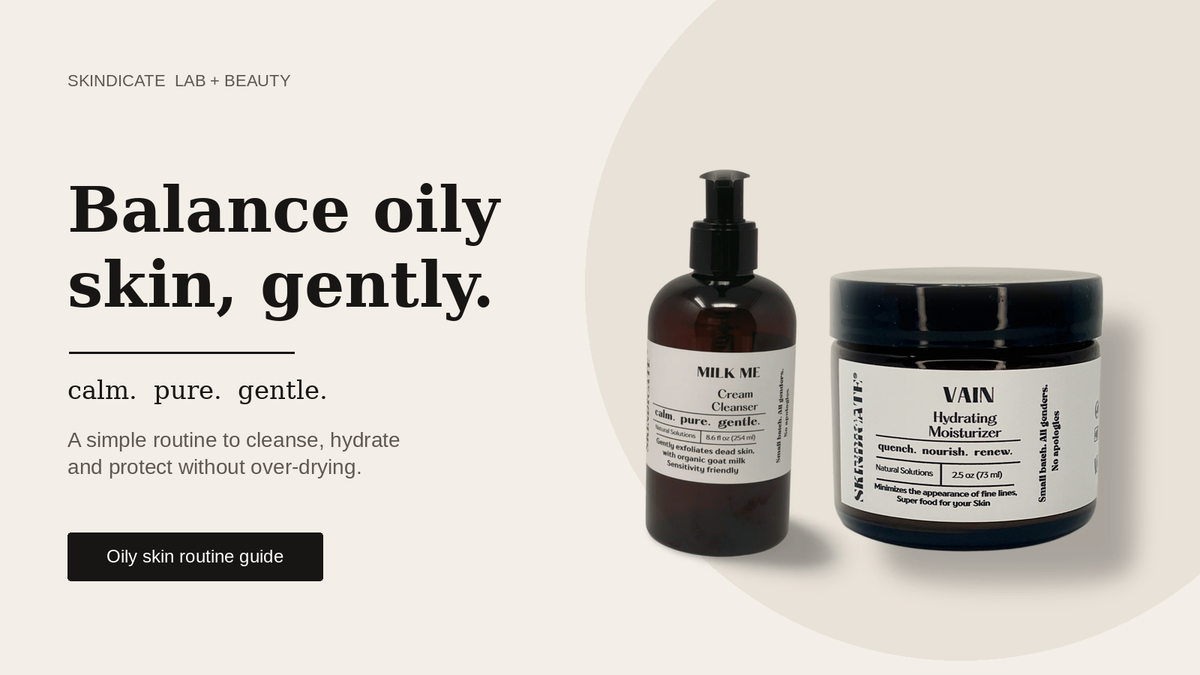
The Hydrating Daily Moisturizer is another option to consider. It contains aloe vera, shea butter, and vitamin E. Depending on the formulation, these ingredients may help support skin hydration and comfort. However, the product's suitability for oily skin depends on its complete formula and how your skin responds to it.
3. Exfoliate Gently, Not Hard
Exfoliating will help to remove dead skin cells that may block pores and trap oil. Too much exfoliating will lead to irritation of the skin and increased production of oil.
You can use chemical exfoliants such as salicylic acid or mild fruit acids, which can penetrate pores and manage oil without harsh exfoliation. It will generally take just one to two exfoliations per week to ensure smooth and soft skin without over-drying.
4. Use Oil-Control Ingredients Thoughtfully
Multiple skincare ingredients control excess oil production and keep your skin hydrated. Here are some of them:
-
Niacinamide: It may help manage excess oil and reduce the appearance of enlarged pores.
-
Hyaluronic acid: It supports your skin in retaining moisture without feeling greasy.
-
Clay-based masks: They soak up any extra oil and help to keep your skin from becoming too shiny.
Always select oil control products for oily skin and do not try too many products at once.
5. Choose Lightweight Products That Keep Pores Clear
People with oily skin may prefer lightweight skincare products that feel comfortable and do not leave an excessively greasy residue. Some products may contribute to clogged pores or breakouts in acne-prone skin. Choosing products labeled “non-comedogenic” may help reduce the risk of clogged pores, although it does not guarantee that a product will be suitable for everyone.
If your skin tends to feel greasy, consider lightweight sunscreen and makeup formulas that feel comfortable on your skin. Oil-free products are an option, but they are not automatically better for everyone with oily skin. Choose products based on your skin's needs and how well you tolerate them.
6. Protect Oily Skin With Daily Sunscreen
Daily sun protection is important for every skin type, including oily skin. Choose a broad-spectrum sunscreen with SPF 30 or higher to help protect your skin against sunburn and long-term UV damage. If you dislike a greasy texture, consider a lightweight gel or fluid formula.
The goal is to find a sunscreen that provides adequate protection and feels comfortable enough for daily use, rather than choosing one solely for a matte finish.
7. Develop Lifestyle Habits That Control Skin Oil Production
Skincare is only one part of maintaining healthy skin. Stress, hormonal changes, and sleep patterns can influence skin health, while diet may affect acne in some individuals.
Aim to drink enough water to stay hydrated, get adequate sleep, manage stress, and follow a balanced diet. These habits support overall well-being, although they cannot guarantee reduced oil production or prevent breakouts.
Remember that oily skin is influenced by several factors, and lifestyle changes alone may not resolve persistent oiliness or acne.
8. Maintain Consistency To Get Desired Skin
Managing oily skin takes patience and consistency. Avoid changing products too frequently, as doing so can make it difficult to identify what works for your skin and may increase the risk of irritation. Follow a simple, balanced routine and introduce new products gradually.
Give your skin time to adjust, and monitor how it responds to your routine. Results vary depending on the products you use and your individual skin concerns. If persistent acne or irritation continues, consider consulting a dermatologist.
A consistent, well-tolerated skincare routine can help you manage excess oil while keeping your skin comfortable and hydrated.
A Simple Morning and Evening Skincare Routine for Oily Skin
Taking care of oily skin doesn't have to be complicated. A simple face care oily skin routine can help remove excess oil and impurities without over-drying your skin.
Morning Routine:
- Wet your face with lukewarm water.
- Cleanse gently with a mild face wash.
- Rinse thoroughly and pat your skin dry with a clean towel.
- Apply a lightweight, oil-free moisturizer.
- Finish with broad-spectrum sunscreen (SPF 30 or higher).
Evening Routine:
- Remove makeup and sunscreen if needed.
- Wash your face with a gentle cleanser to remove excess oil, sweat, and impurities.
- Rinse with lukewarm water.
- Pat your skin dry without rubbing.
- Apply a lightweight moisturizer to maintain hydration and support your skin barrier.
Remember: Avoid harsh cleansers and excessive washing, as they can irritate your skin and cause dryness. The goal is to remove excess oil while keeping your skin comfortable, hydrated, and balanced.
Common Mistakes to Avoid for Oily Skin
Look at the following common mistakes to avoid:
- Washing Your Face Too Often: More cleansing doesn't mean better results. Washing your face too often can cause dryness and irritation.
- Using Very Hot Water: Hot water is not required when cleansing the face, as it irritates the skin. Lukewarm water is the best choice to go when cleansing the face regularly.
- Aggressive Scrubbing: Scrubbing can provide a short-term effect of making your skin smoother. But scrubbing aggressively can irritate your skin. Therefore, always cleanse gently with your fingertips.
- Skipping Moisturizer or Using Harsh Toners: Oily skin requires hydration too. Applying oil-free, non-comedogenic moisturizers or a gentle toner for oily acne-prone skin would help you to control excess oil, hydrate your skin, and keep your skin refreshed after cleansing.
- Switching Skincare Products Too Often: Allow enough time for your skincare routine to show results. Always changing your products will make it hard to decide which product is good for your skin type.
Conclusion
Managing oily skin is all about finding the right balance, not removing all the natural oil from your skin. Follow a simple skincare routine with gentle cleansing, lightweight moisturization, and daily sunscreen to keep your skin healthy. Avoid harsh products and excessive washing, and stay consistent with your routine to manage excess oil without over-drying your skin.
Ready to give your skin the care it deserves? Try our vast selection of skin products for oily skin at SKINDICATE, which are natural, effective, and use only ingredients that are ethically and sustainably sourced and carefully selected for their purity, potency, and performance.
Frequently Asked Questions
Why does my T-zone get oilier than the rest of my face?
Your forehead, nose, and chin have more active oil-producing glands. This causes these areas to look shiny. Use a gentle cleanser and lightweight, oil-free products to manage excess oil without drying your skin.
Can oily skin become dehydrated?
Yes, oily skin may be dehydrated yet produce excess oil at the same time. Harsh cleansers and over-exfoliation can worsen dehydration. So, always use a gentle cleanser and a lightweight moisturizer to maintain hydration.
How often should I wash my face if I have oily skin?
It is generally sufficient to wash your face twice daily, in the morning and evening. Use a gentle cleanser and lukewarm water for washing your face. Avoid excessive washing as it can irritate your skin and damage its protective barrier.
Is it better to use a foaming cleanser for oily skin?
A gentle foaming cleanser can help remove excess oil, dirt, and impurities. You should choose a cleanser that works well without making the skin tight or dry.
How long does it take to balance oily skin?
It may take several weeks to notice improvements after creating a consistent skincare routine. Results depend on your skin type, products, and hidden factors that cause excess oil.
Should I use a toner every day if I have oily skin?
Not necessarily. A toner is optional and can be skipped if it does not address a specific skin concern. Nonetheless, it is necessary to use a gentle moisturizer and avoid products that cause dryness or irritation.